
The month is over. The month has ended.
You should then check the bank account of the restaurant.
The number you received wasn’t what you would have expected.
This gap is a problem for restaurant owners since they think that profit and cash on hand should tell the same tale. But they don’t. A P&L is a measure of the financial performance of a firm over a certain period of time, while an account in a bank shows the exact timing of money moving into and out of he business.
Understanding the difference will change the way a restaurant owner considers their financials.
Look at what happens in a normal week. Customers pay for meals. Employees need to be paid. Food and beverages are handed out. Rent is on the way. The time of debits to credit cards is different. Sales tax has been collected, however that money comes with an obligation.
Already the purchases for the week ahead have begun.
If you are only looking at the amount of revenue or profits, you’ll miss a lot of this process.
Prime Cost could be the Key to the Clue
Food, beverages and labor costs merit a closer examine when restaurant profitability begins to decrease.
Together, the cost of the goods sold and the labor cost together make up the bulk of the cost. The Bookkeeping Chef’s guidance puts prices for the prime cost at around 60% to 65 percent for most restaurants and focuses on weekly monitoring instead of staying until the end of of the month.
Effective prime cost management is less about obsessing over a single percentage and more about noticing movement early.
Let’s say that typically, the restaurant is performing at a high level, however this week it’s a higher percentage. Maybe overtime increased. Perhaps, the costs for beverages remained constant but food costs increased. The chef may look over menus, waste, portion sizes, vendor invoices, and buying if the percentage of food is greater.
The percentage is a source of concern. The answer lies in the activity of the restaurant.
A weekly report makes an opportunity for conversation while everyone remembers the events.
Two or three weeks later after that, the details become more difficult to understand.
Then the Vendor Bills Arrive
Restaurants can purchase ingredients the week before and make payments the following week. This explains the reason why profit alone isn’t enough to answer all cash questions.
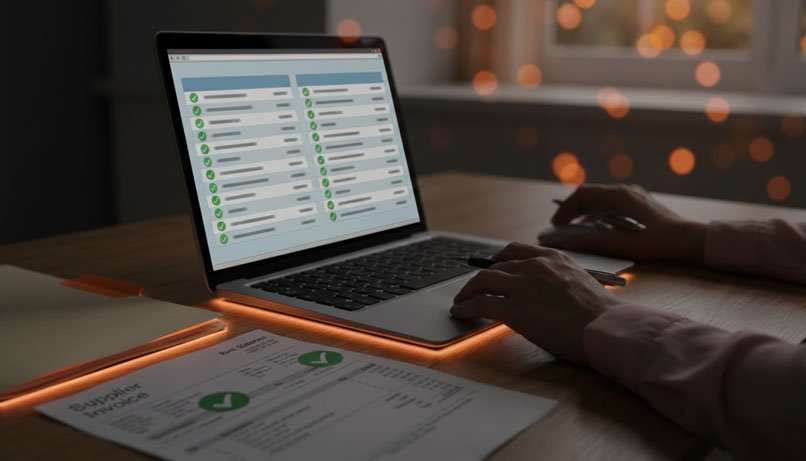
Vendor invoices need to be received, recorded and tracked before being paid. Doing this manually in an office with many suppliers can become a huge administrative burden.
Automating accounts payable helps to streamline this process by eliminating the need to handle bills in a repetitive manner and payment information. These bookkeeping systems are also able to provide the owner with a clearer image of the obligations which haven’t yet deposited into the account of the bank.
This is advantageous, since the bank’s balance could seem healthier than a restaurant’s actual situation in the near future.
It could be that you have $80,000 on your account right now. It could mean something different if rent, payroll and vendors obligations will consume a large portion over the next few days.
That leads naturally to the process of forecasting cash flows.
Instead of asking “How much cash do we have?” the better question is “What is going to happen to our cash after the money we’re expecting to receive and the obligations we know about?”
The distinction could be important when deciding whether this is a suitable week to repair equipment, make an additional purchase, or preserve the liquidity.
The Money You Received Could Not Be Yours
Sales tax highlights this in particular.
A restaurant receives money from customers which needs to be handled according to tax requirements. When these dollars are mentally put together with operating cash, it can give a false impression of the amount of money that is available for spending.
Consistent record keeping helps restaurants to comply with the sales tax laws and also giving a clear image of their financial condition.
It is for this reason that restaurant accounting can be more effective when financial responsibilities don’t are treated as separate islands.
Prime cost affects margin. COGS (cost of products sold) and future payments are affected due to purchases from vendors. Cash and labor percentage are affected by payroll. The availability of cash is influenced by the sales tax. The P&L shows financial performance, and forecasting assists management to look ahead.
Connect the pieces.
Bookkeeping Chef utilizes restaurant-specific reporting and system integrations that help put all the pieces together. Outsourced bookkeeping services that are specifically tailored to your needs are an excellent alternative for businesses that don’t have the time to reconcile their financial data. They are able to handle the bulk of the accounting tasks without removing the owner from the financial discussion.
The last section is very important.
Restaurant owners should never stop going through the manuals even if they’re managed by another. Owners must be provided with information that helps them be aware of what’s happening.
If the P&L indicates that the restaurant made money but the bank account seems to be a bit tight, don’t presume that one of the numbers could be off.
What was the difference between them?
The answer to this question will provide more information about the restaurant than just a number.